Recognition doesn’t happen in a single moment. For a brand, the real goal is to become familiar enough that people remember it later, and that kind of familiarity comes from seeing the same message more than once.
Some brands have gone so far that their names replaced the category. People ask for a Band-Aid, not an adhesive bandage. They reach for a Kleenex, not a tissue. Those names didn’t stick because of one great ad. They stuck because people saw them everywhere, again and again, until the brand and the product became the same thing in people’s minds. So it’s worth asking: when someone thinks of your category, is your brand the name that comes to mind?
Transit advertising is built for that kind of repetition. The message doesn’t interrupt someone’s day. It becomes part of it, showing up on the streets, at the stops, and on the rides people already take.
Bus Advertising and Bench Advertising in Everyday Life
Take an everyday drive across town. A bus ad rolls by in the next lane. A shelter ad sits at a corner the driver passes every day. A bench ad stands near the shops along the way. That’s the same person seeing the same brand in three different moments, and they never had to click, tap, or look at a screen to see any of it.
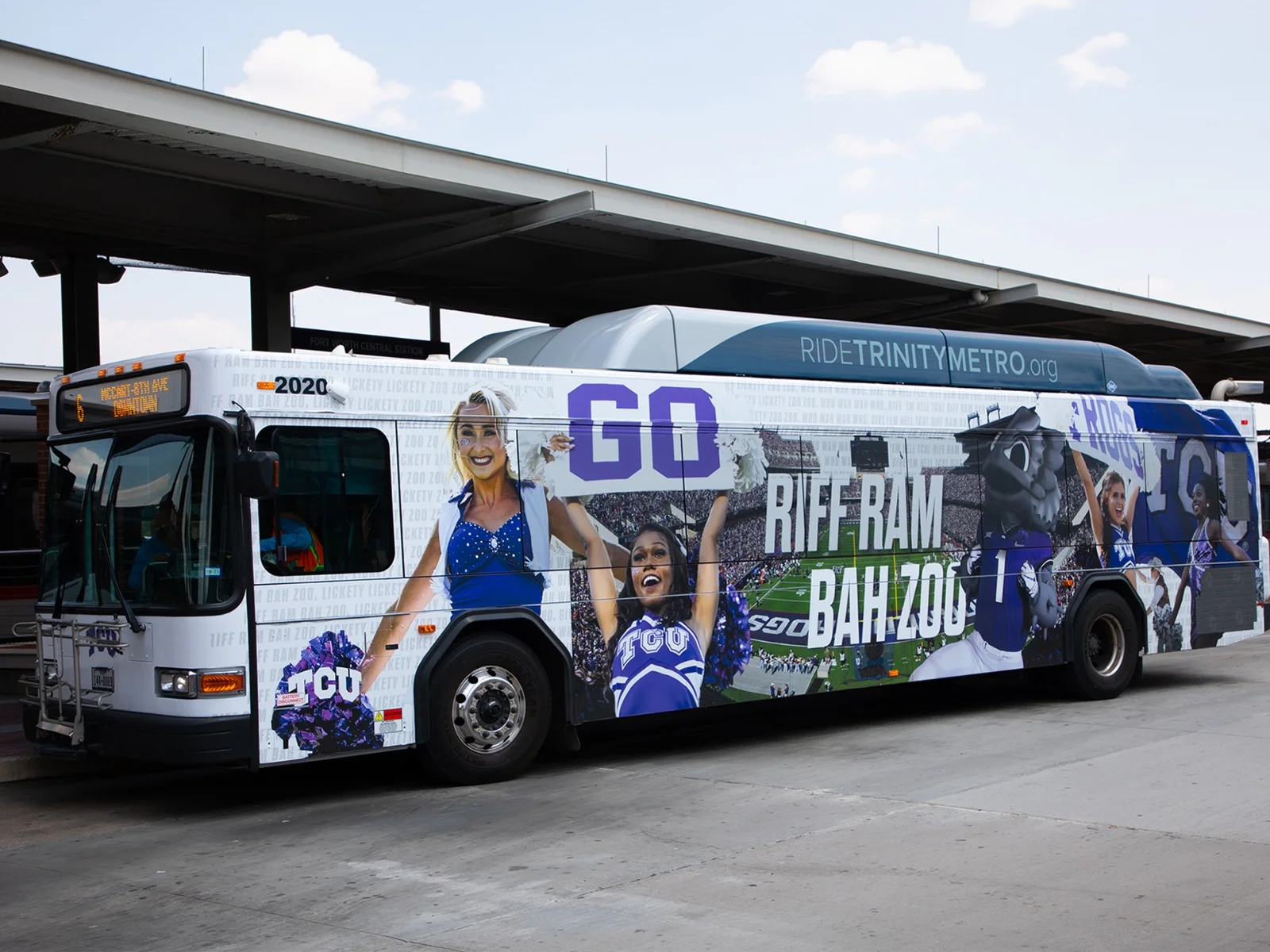
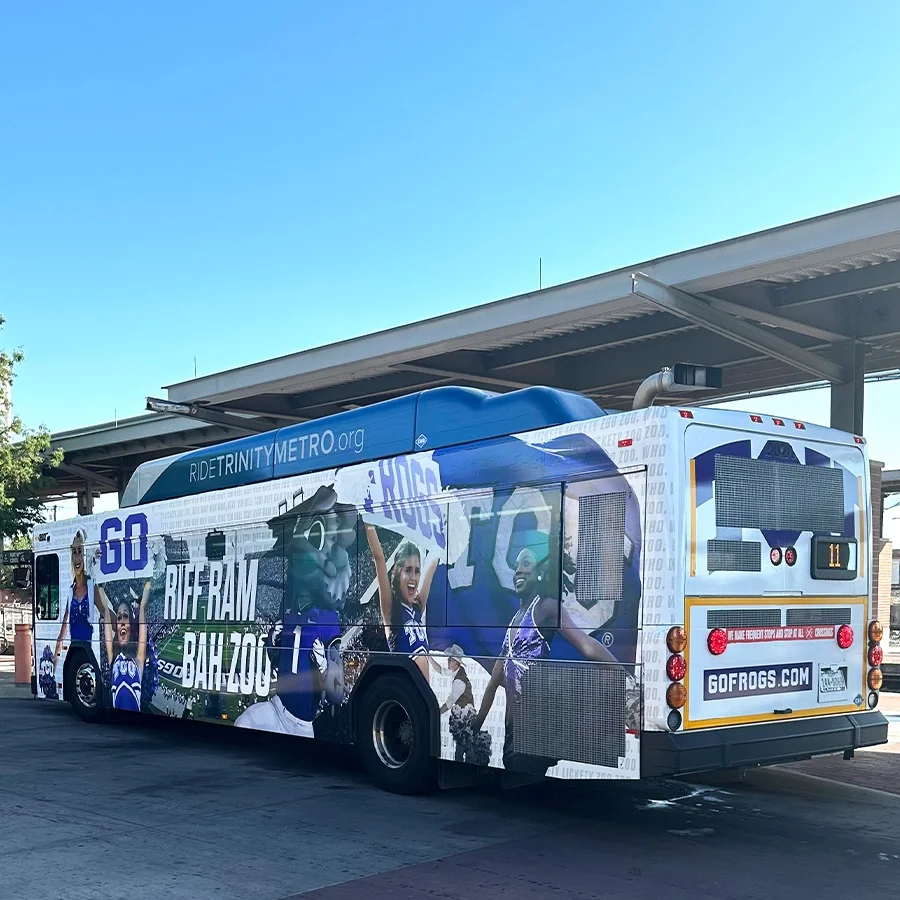
The format shapes how the message lands. A Full Bus Wrap gives a brand a big presence on the street. Other exterior formats run the message along the side or back of the bus. Shelter and bench ads sit at street level, where people walk and drive past. Interior ads ride along with commuters for the whole trip. The right choice depends on where people will actually see the message and what the campaign needs it to do.
Repetition is what makes these placements work together. When people see the same brand in the same familiar spots often enough, the name sticks. That’s also why campaign length matters. We recommend three months or more when the goal is building familiarity. With that kind of runway, a message stops feeling like an ad and starts feeling like part of the routine.
Case Study: Mi Cozumel in Cincinnati
Mi Cozumel is a modern Mexican restaurant with three locations in Cincinnati, a market with plenty of dining options and plenty of other Mexican restaurants. To stay relevant, the restaurant needed people to keep seeing its name until it came to mind whenever they were choosing where to eat.
Mi Cozumel ran full-wrap Cincinnati Metro buses designed around the restaurant’s logo: purple exteriors, neon lettering, and images of its signature margaritas and flaming fajitas. The wrap launched with a Cinco de Mayo event. A wrapped bus stopped at each Mi Cozumel location, cars followed it, and patrons posed for photos.
That’s how familiarity gets built. A bold, consistent design that people see again and again around the same city gives them something to recognize and recall, and the Cinco de Mayo launch tied the restaurant’s name to a moment people were already celebrating. After the event, Mi Cozumel extended its original six-month order to a full year and bought two additional full wraps.
Mi Cozumel is still a customer today. The restaurant has now advertised on transit for more than three years. That means more than three years of Cincinnati residents seeing the same purple buses on their commutes, errands, and drives across town. That is the kind of repetition that turns a restaurant name into a household name.
The Lasting Value of Transit Advertising
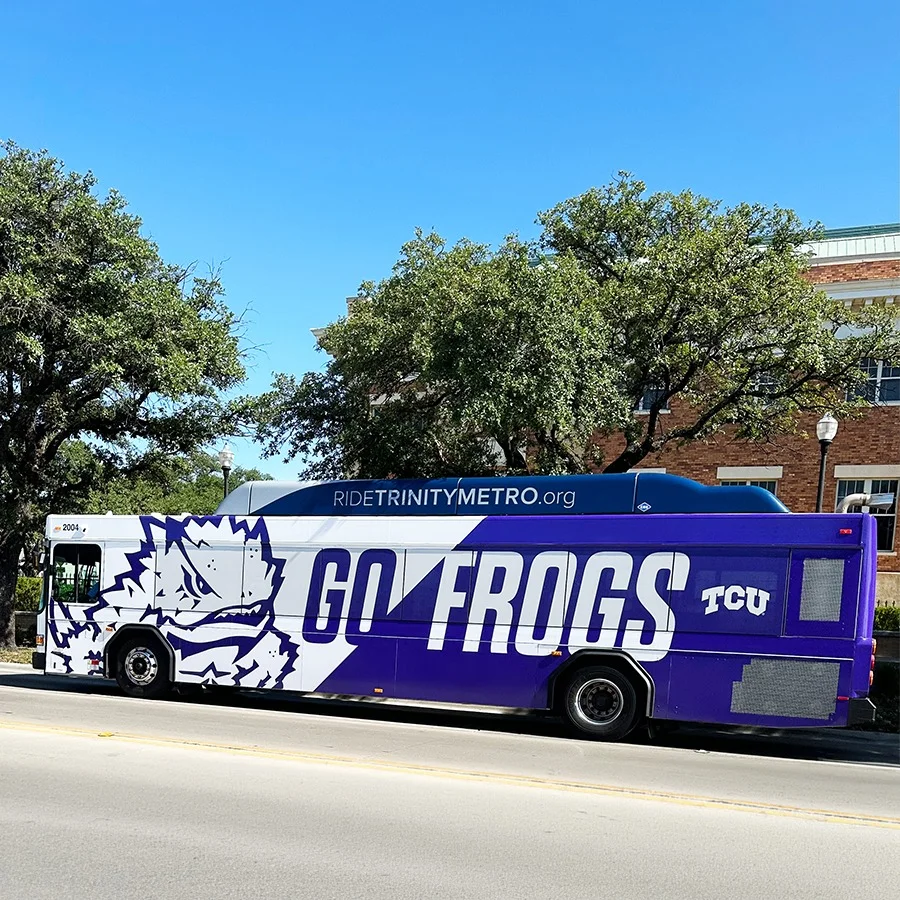
Transit advertising puts a brand in front of people during their actual day: on the street, at the stop, and inside the ride. Paired with digital advertising, it turns repeated exposure into an online next step.
That’s the idea behind transit advertising. A brand doesn’t need one big moment to be remembered. It needs to keep showing up in the places people already are.