
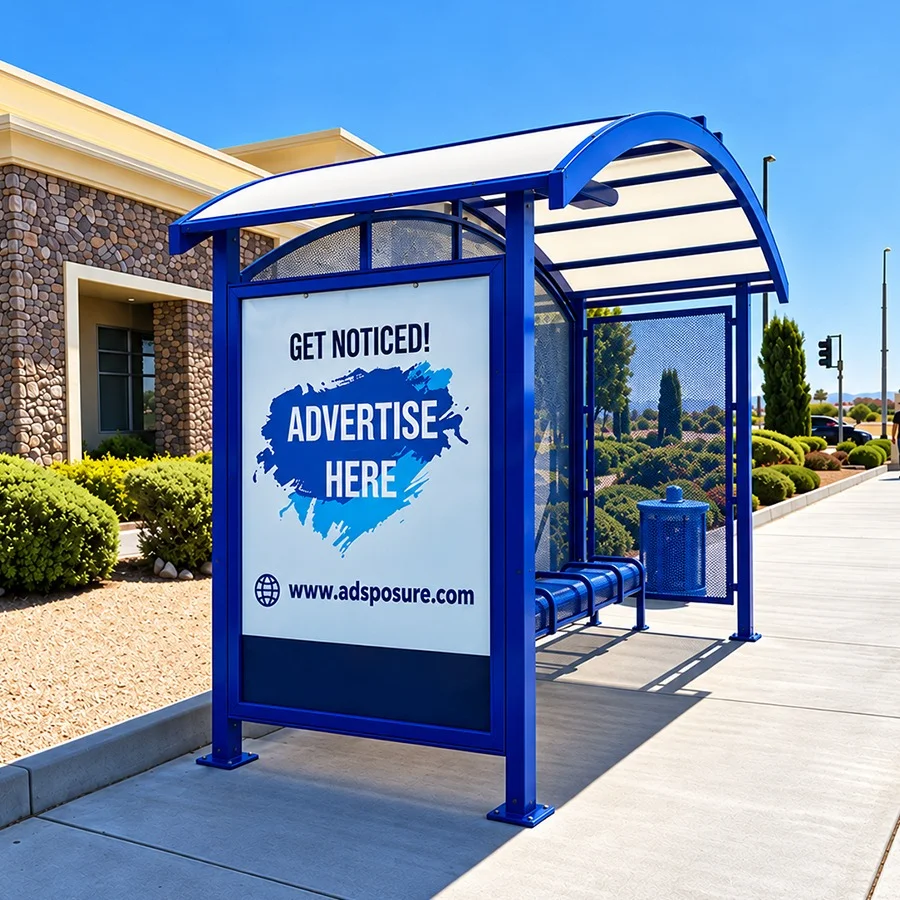
Ask most advertisers what a transit ad looks like and they describe a bus wrap. Wraps are a strong format, but they are not the only way to put a brand on the street. Bus shelter advertising places your message at eye level in a fixed spot along a busy road, where people driving, sitting in traffic, and walking by see it again and again. Think of it as an eye-level billboard that sits exactly where your audience already is. This guide explains what a shelter ad is, where it works hardest, and what to confirm before you plan one.
What a Shelter Ad Actually Is
A shelter ad is a printed panel built into a transit shelter. Unlike a bus, it does not move. It stays in one place, on one street, every day of the campaign.
That makes it a different tool from a wrap. A bus wrap carries your message across the city. A shelter gives you a fixed local presence in a specific spot you choose. Many advertisers search for this format as bus stop advertising or transit shelter ads, and the idea is the same: a message placed at eye level where people pass.
Who Sees a Shelter Ad
Shelters sit on busy streets, so the audience is everyone moving along them. That includes drivers stopped at a light, people sitting in traffic, and pedestrians walking to shops, offices, and campuses.
Because the ad is at eye level, it does not depend on a person looking up or glancing across a lane. The message is right there in their line of sight, and the same people pass it day after day. Repeated exposure is how a brand becomes familiar.
Location Is the Real Advantage
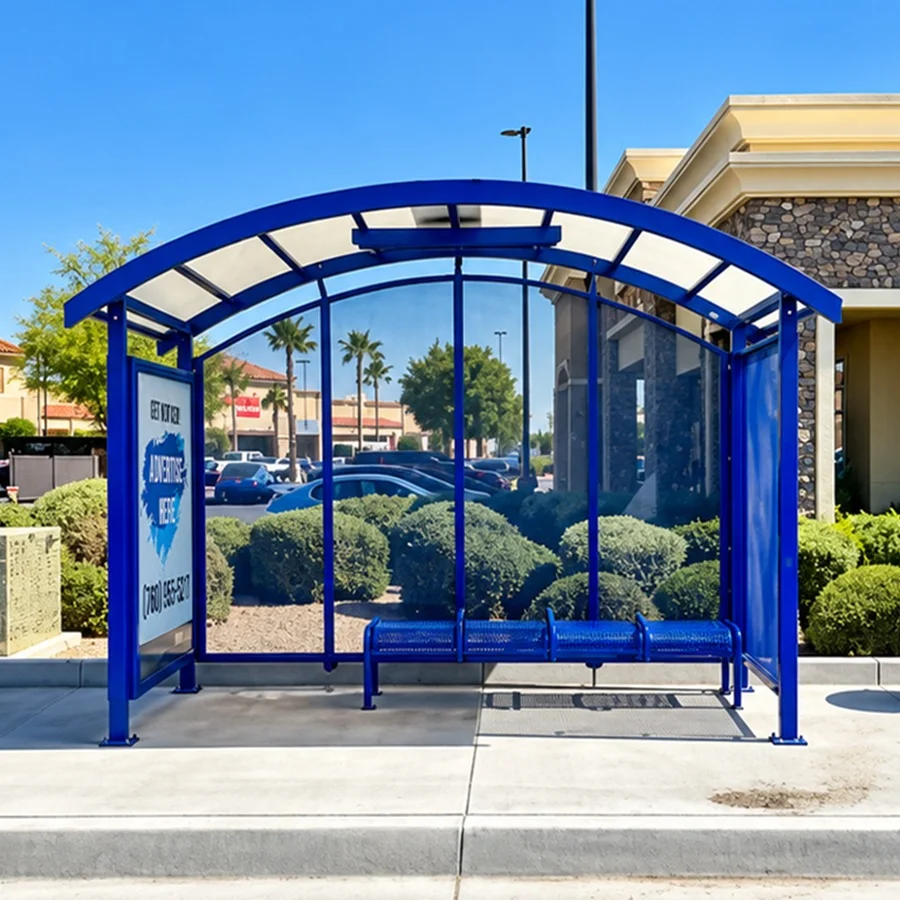
The practical strength of a shelter ad is that you choose where it appears. If your business has a physical location, a shelter nearby puts your message in front of people close to your door. If you want to reach customers who are already thinking about a competitor, you can look for a shelter near that competitor’s location.
This is useful for advertisers with a place people need to find, such as a restaurant, a healthcare provider, a university, or a retailer. It also helps when a campaign is built around a neighborhood, an event, or a grand opening, because the message appears right where the activity is.
How Shelters Fit With Other Transit Formats
Shelters do not replace bus advertising. They work alongside it. A common approach is to pair the citywide reach of the bus formats with the local, eye-level presence of shelters in the areas that matter most to your business.
Adsposure offers a full range of transit formats, including exterior bus formats, interior ads, shelters, and, in select markets, benches and rail. Starting the conversation with only a full wrap can hide options that fit a goal better. Shelters are worth asking about every time.
Designing for a Passing Audience
Most people see a shelter ad while moving, so the message needs to read quickly. A clear headline, one strong image, and an easy-to-find business name or web address work better than a crowded layout.
Because the placement is fixed, you can also tailor the message to the spot. An ad near a hospital campus can speak to patients and families, and an ad near a university can speak to prospective students. The location tells you who is walking and driving past.
What to Confirm Before You Plan
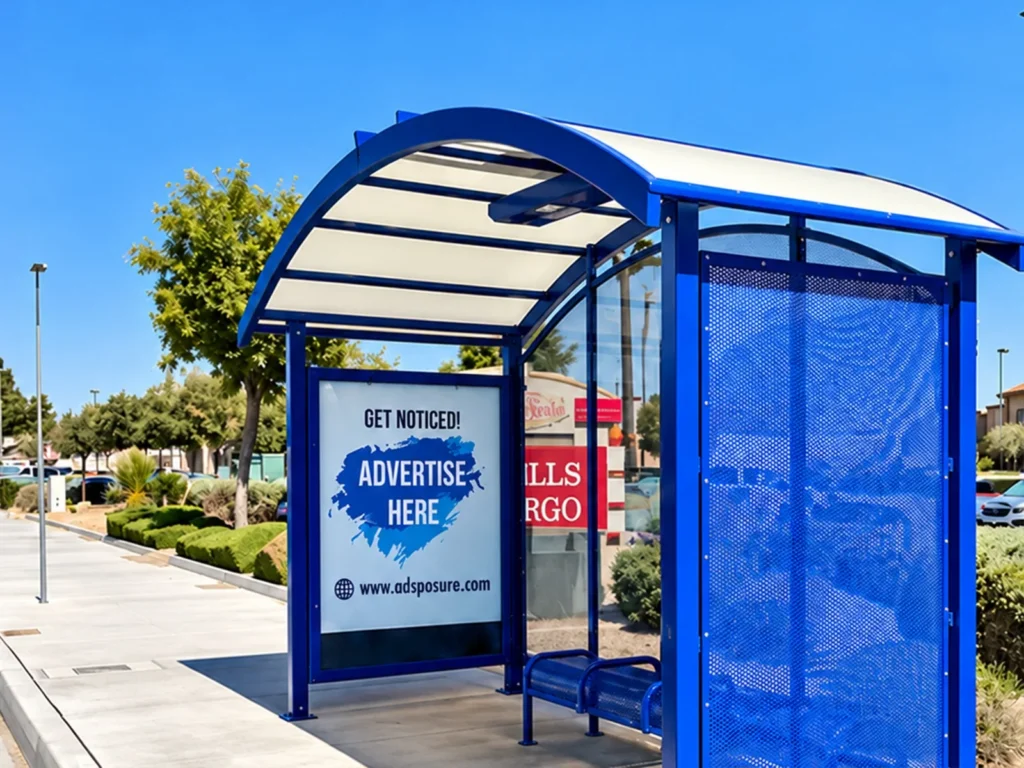
Available formats differ from market to market. Shelter types, sizes, and locations are not identical everywhere, and some formats exist in only certain cities. For example, bench advertising is currently available in Fort Worth and Tulsa.
Before you commit, confirm current options for your market using the Adsposure specifications guide. An experienced bus shelter advertising company will tell you what is available now and match it to your audience, rather than assuming every format is open in every city.
The Takeaway
If you have only considered bus wraps, take a second look. Shelter ads put your message at eye level on busy streets, near your business or a competitor, in front of people driving, sitting in traffic, and walking by.
Tell us who you want to reach, where, and when. Adsposure will help you build a transit plan that fits, including whether shelters belong in it.